



Supporting measurable progress with proven solutions
Our technologies and material expertise help customers address defined sustainability goals, including energy efficiency and recyclability, supported by lifecycle assessments and recognized third-party standards.
Our approach to sustainability
At Freudenberg Performance Materials, sustainability is integrated into how we develop materials, optimize processes, and collaborate with our customers. As part of the Freudenberg Group, our activities are aligned with the Group's Decarbonization Strategy and guided by defined environmental targets, documented actions, and transparent reporting.
We incorporate environmental, social, and economic considerations into our business activities through measurable objectives and continuous improvement initiatives. Our progress is monitored against defined milestones and communicated through our sustainability reporting.
Our long-term environmental targets include:
- Carbon neutrality for Scope 1 and Scope 2 emissions by 2045
- Reduction of absolute CO₂ emissions by 25% by 2025
- Reduction of absolute CO₂ emissions by 45% by 2030
Progress towards these targets is regularly monitored and reported as part of our sustainability reporting.
Request the 2025 Sustainability Report
Reducing CO2 emissions – a clear target
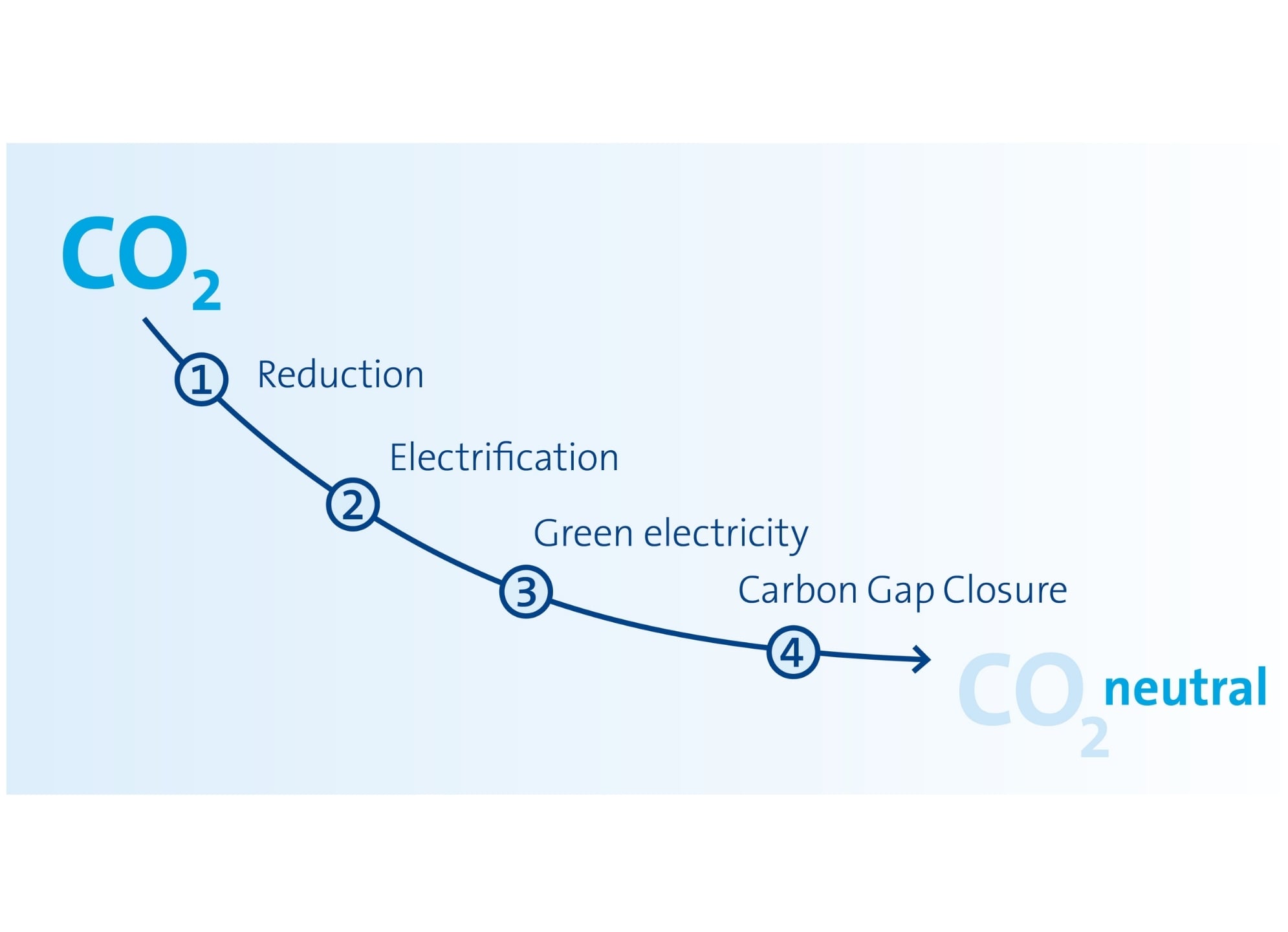
Freudenberg Performance Materials has defined a long-term target of achieving carbon neutrality for Scope 1 and Scope 2 emissions by 2045. This target is part of the Freudenberg Group's published Decarbonization Strategy and is supported by defined milestones, regular monitoring, and transparent reporting.
Our approach combines emissions reduction with the development of materials and solutions that support resource efficiency and circularity. Depending on the application, selected product lines incorporate recycled PET and other secondary raw materials, as documented in the relevant technical information.
Our product development activities include solutions based on design-for-recycling principles. For selected applications, this includes mono-material nonwovens and products developed without chemical binders to support recycling at the end of their service life, where suitable collection and recycling systems are available.
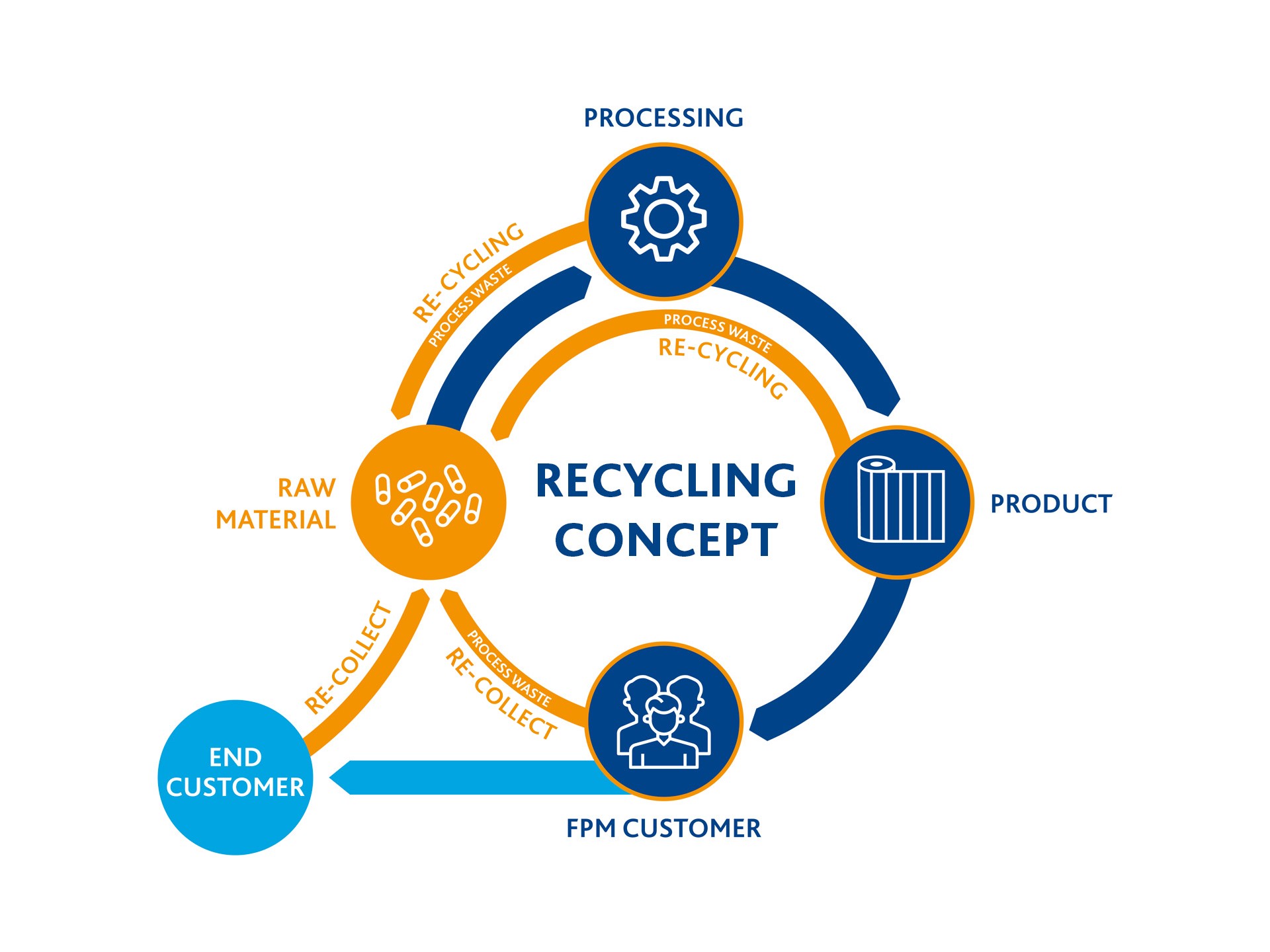
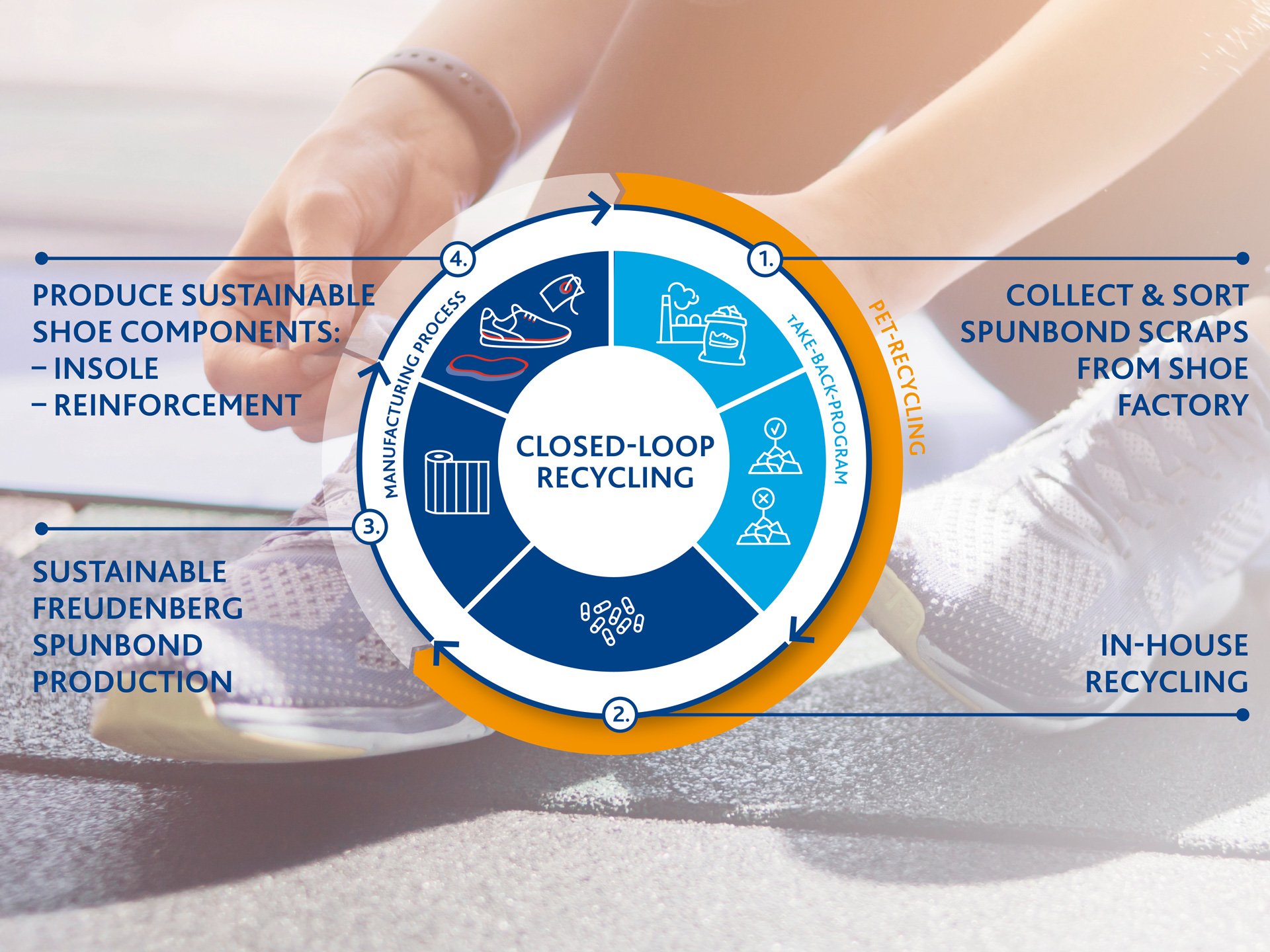
We also work to recover production waste from our own operations and, where applicable, from customer processes for reuse in manufacturing. In selected applications, take-back concepts are developed together with customers to support material recovery, such as mono-material shoe components designed for recycling after use.
According to our published sustainability reporting, Scope 1 and Scope 2 CO₂ emissions have been reduced by 37% since 2020. Our current target is a 45% reduction by 2030 on the path towards carbon neutrality by 2045. Further information on targets, reporting boundaries, methodologies, and progress is available in our Sustainability Report.
The 5 key principles in product design for circularity and resource efficiency

Durability
Today’s products and future developments must deliver consistent, long-lasting performance under defined usage conditions. To achieve this, Freudenberg Performance Materials invests in material innovations that enhance wear resistance and extend service life. For example, structural material modifications have improved durability by up to 100 % compared to previous designs, as verified in standardized testing (optimized washing stability of cleaning wipes from 200 to 400 washing cycles).

Compostability
Freudenberg Performance Materials uses polymers for selected applications that are certified according to ISO 11721-1 and ISO 14855 for industrial composting. When processed under controlled conditions in an appropriate facility, these materials can decompose into water and CO₂ without generating persistent microplastics. Product-specific composting instructions and certifications are provided in the technical documentation. Together with our customers, we develop customized solutions that combine required application stability with verified end-of-life options.
Renewability
Switching to using biobased polymers supports Freudenberg Performance Materials objective to reduce the carbon footprint of raw materials. These biopolymers are certified according to e.g FSC-STD-40-004 and can make up to 100% of the polymer content, depending on the application. We collaborate with suppliers who meet defined sustainability and compliance standards.

Dematerialization
Freudenberg Performance Materials optimizes technologies to maintain required performance while reducing material use. For example, in specific applications, these developments enable weight reductions of up to 20% compared with previous product generations, which can contribute to lower material demand and improve resource efficiency.
Recycling
To support circularity, we design selected products using a mono-material approach, which simplifies recycling at end of life. Where appropriate recycling systems are available, such products can be processed more easily into material streams for reuse. Product-specific recycling options and conditions are included in the technical documentation.
Durability
Today’s products and future developments must deliver consistent, long-lasting performance under defined usage conditions. To achieve this, Freudenberg Performance Materials invests in material innovations that enhance wear resistance and extend service life. For example, structural material modifications have improved durability by up to 100 % compared to previous designs, as verified in standardized testing (optimized washing stability of cleaning wipes from 200 to 400 washing cycles).
Compostability
Freudenberg Performance Materials uses polymers for selected applications that are certified according to ISO 11721-1 and ISO 14855 for industrial composting. When processed under controlled conditions in an appropriate facility, these materials can decompose into water and CO₂ without generating persistent microplastics. Product-specific composting instructions and certifications are provided in the technical documentation. Together with our customers, we develop customized solutions that combine required application stability with verified end-of-life options.
Renewability
Switching to using biobased polymers supports Freudenberg Performance Materials objective to reduce the carbon footprint of raw materials. These biopolymers are certified according to e.g FSC-STD-40-004 and can make up to 100% of the polymer content, depending on the application. We collaborate with suppliers who meet defined sustainability and compliance standards.
Dematerialization
Freudenberg Performance Materials optimizes technologies to maintain required performance while reducing material use. For example, in specific applications, these developments enable weight reductions of up to 20% compared with previous product generations, which can contribute to lower material demand and improve resource efficiency.
Recycling
To support circularity, we design selected products using a mono-material approach, which simplifies recycling at end of life. Where appropriate recycling systems are available, such products can be processed more easily into material streams for reuse. Product-specific recycling options and conditions are included in the technical documentation.
Partner with us
We collaborate with customers to develop products designed with clear environmental criteria, such as recyclability, certified biobased content, or improved energy efficiency in use. Our portfolio includes options that meet defined standards and allow product-specific verification. Together, we can tailor solutions to your market requirements and provide transparent data on material composition and end-of-life handling.
Progress towards defined environmental and efficiency targets
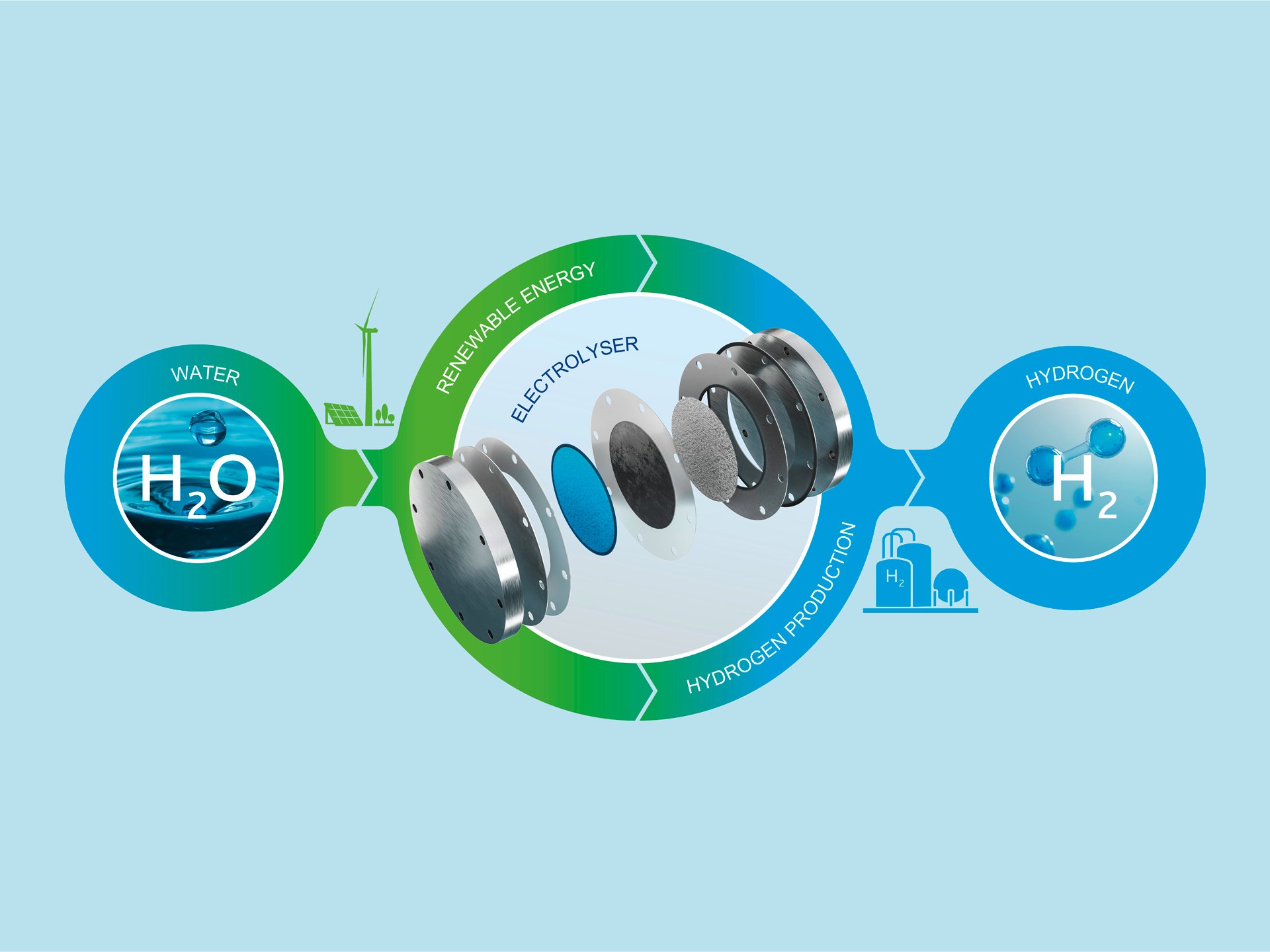
Freudenberg Performance Materials develops components for fuel cells and electrolysers that support the transition to low-carbon energy systems. These include gas diffusion layers (GDL) for fuel cells and carbon-based electrode materials for proton exchange membrane (PEM) and anion exchange membrane (AEM) electrolysers. Our materials are designed to enhance durability and efficiency under defined operating conditions and have been validated through standardized performance tests. When operated with electricity from renewable sources, these electrolysers enable the production of hydrogen without process-related CO₂ emissions. Product data sheets provide detailed technical characteristics and recommended application scenarios to ensure transparency.
With the BEE – Be Energy Efficient – initiative, Freudenberg Performance Materials is pursuing the goal of systematically reducing energy use across all sites through targeted and verifiable initiatives. These include:
- Process optimization and digital energy monitoring
- Upgrading equipment for improved efficiency
- Implementing projects focused on electrification and heat recovery
BEE also integrates awareness programs for employees at all levels to ensure consistent application of energy-saving measures in daily operations. Our objective: reduce specific energy consumption (energy efficiency [kWh/kg 1st grade]) by 5% by 2030 compared to the 2025 baseline, as documented in our sustainability roadmap and reports.
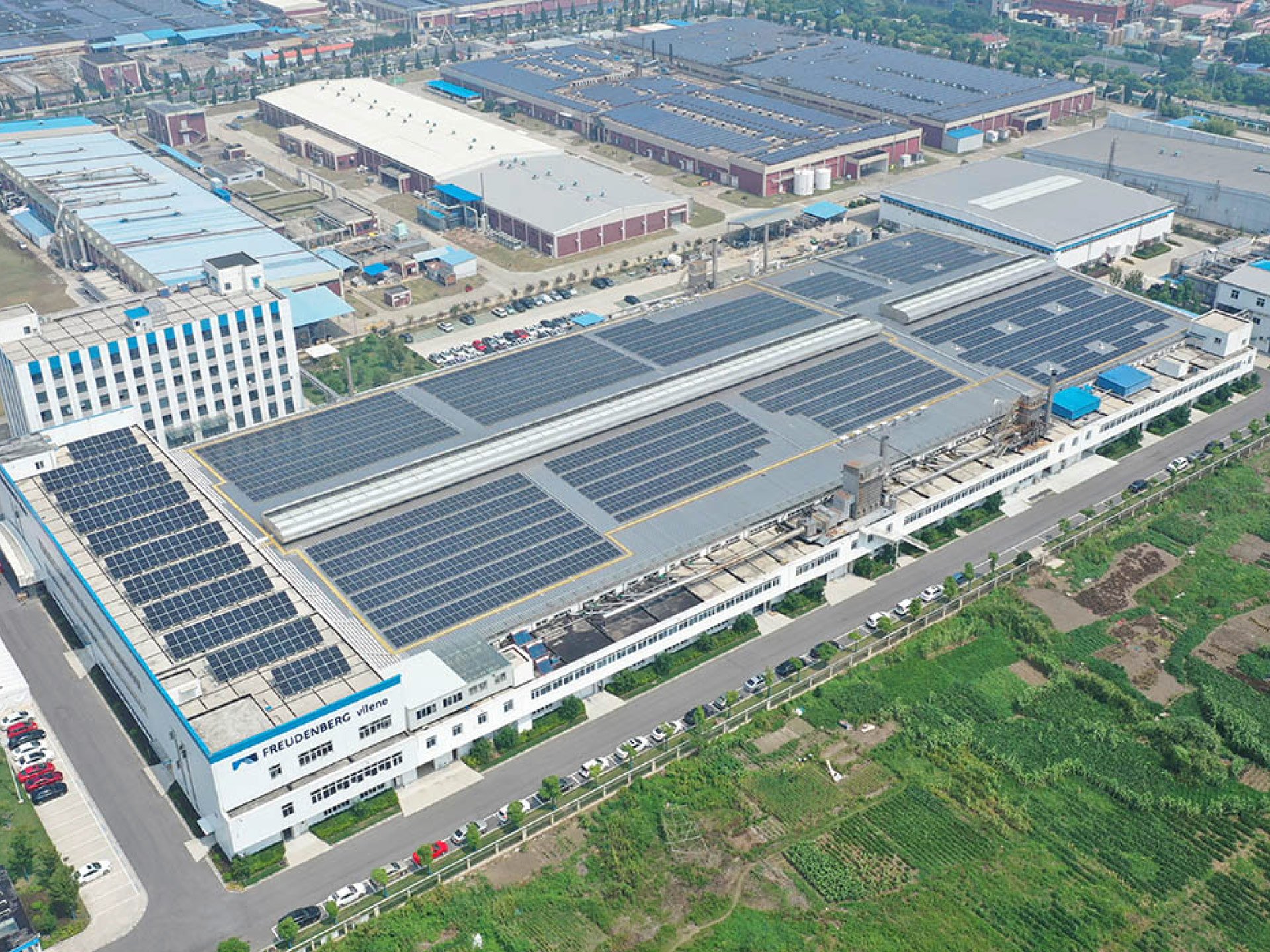
Freudenberg Performance Materials is increasing the use of renewable electricity as part of its decarbonization roadmap and to support the reduction of market-based Scope 2 emissions. A key measure is the use of Power Purchase Agreements (PPAs), which enable the procurement of renewable electricity from defined sources.
In addition, we are expanding on-site renewable electricity generation through large-scale photovoltaic (PV) systems installed at our production sites. Today, approximately 900,000 m² of PV area is in operation, contributing to a renewable electricity share of 33.6% in 2025.
Our target is to increase the share of renewable electricity to 50% by 2030 through a combination of on-site generation and external renewable electricity sourcing. Progress towards this target is monitored and reported annually in our Sustainability Report.
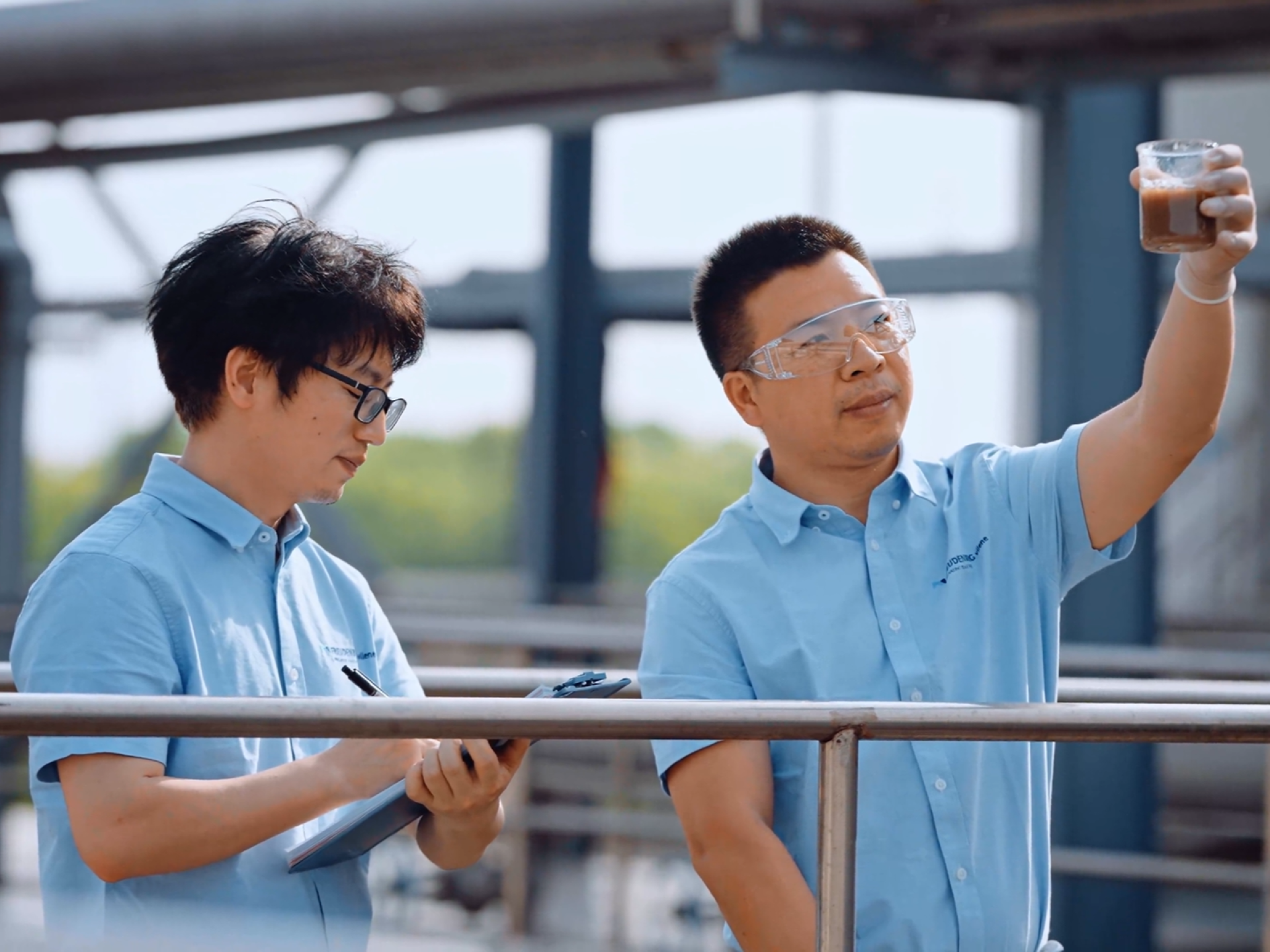
Water is an essential resource for our production processes. To reduce freshwater consumption and manage wastewater responsibly, Freudenberg Performance Materials operates water treatment plants at selected sites. These facilities enable purification and, in some cases, recirculation of process water into production.
This not only reduces our freshwater requirements, but also the burden on municipal sewage systems and the environment. The wastewater treatment rate at Freudenberg’s Nantong plant is 100%; the direct reuse rate of treated wastewater is 34.5%. All measures and progress are documented in line with ISO 14001 requirements and reported in our sustainability disclosures.
Freudenberg Performance Materials offers a take-back option for selected product ranges and production residues where defined recycling processes are available. Materials returned through this program are sorted and processed so they can re-enter material cycles or, if recycling is not feasible, be disposed of in accordance with legal and environmental standards.
This approach helps reduce waste and increase the share of recycled content in new products. For example, in 2025, 24.98 tons of material were returned and reprocessed through the program. Detailed conditions and participation requirements are provided to customers in the program guidelines.
At Freudenberg Performance Materials, we recognize our social responsibility in every country where we operate. In addition to our own local initiatives, we actively participate in Freudenberg Group programs.
One such initiative is the e² program - focusing on education and the environment - which supports community projects across all Freudenberg locations. Our employees contribute to and benefit from this platform, which encourages meaningful engagement.
Furthermore, the Groupwide "We all take care" (WATC) initiative is an employee-driven initiative that empowers everyone within the company to actively contribute to health, safety, environmental protection, sustainability, and site safety projects. This initiative has been running since 2002 and is one of the most active programs within the Freudenberg Group and Freudenberg Performance Materials, with over 300 projects submitted by all Business Groups each year. Several initiatives from teams at Freudenberg Performance Materials have been recognized through these awards.

Social responsibility as part of our sustainability approach
We promote diversity and inclusion within our workforce and stand for a corporate culture in which all employees can contribute their strengths. Beyond this, we support social initiatives and community projects worldwide in line with our corporate values.
Our approach to social responsibility is guided by relevant frameworks, including the EU ESG framework (E= Environmental, S= Social, G= Governance) and the UN Sustainable Development Goals (SDGs). Related activities, targets, and progress are documented through our sustainability reporting.
Alignment with global frameworks
Freudenberg Performance Materials aligns its sustainability activities with selected global frameworks, including the United Nations Sustainable Development Goals (SDGs) and the UN Global Compact.
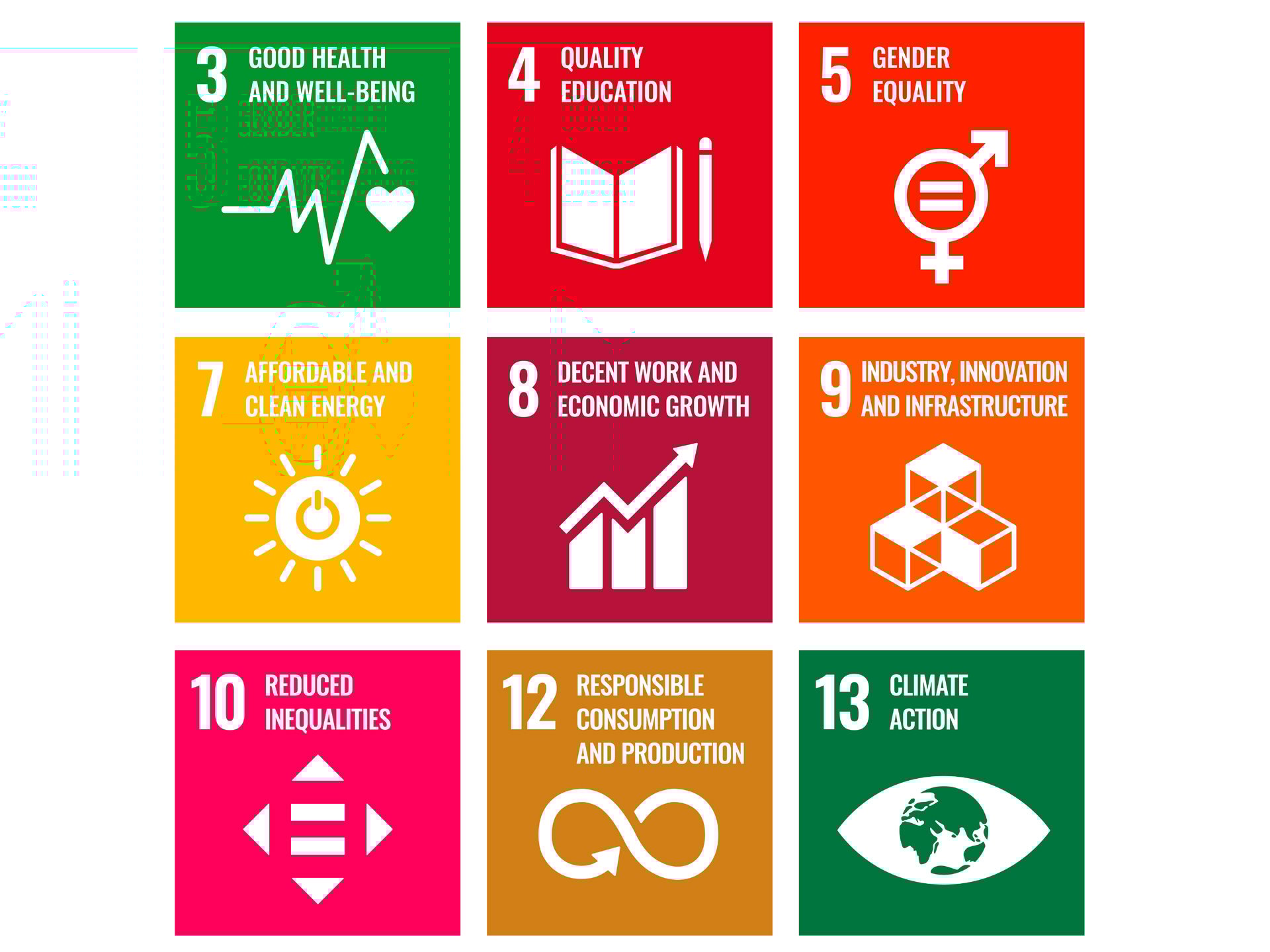
As part of the Freudenberg Group, we focus on nine of the 17 SDGs that are particularly relevant to our business activities and where we can contribute through defined initiatives and actions. These priorities guide our approach in areas such as climate action, resource efficiency, responsible production, and social responsibility. They are reflected in measurable targets across our environmental and social programs. Progress, concepts, and further actions are transparently documented in our annual Sustainability Report.
Freudenberg is a participant in the UN Global Compact and aligns its activities with its 10 principles in the areas of human rights, labor standards, environmental responsibility, and anti-corruption. The implementation of these principles and related progress are regularly communicated through regular reporting (Communication on Progress).