

Evolon® The Food Bag
Keep certain tested foods fresher for longer with Evolon® The Food Bag. Helps reduce food waste when properly used.
- Evolon
- News
- Insight
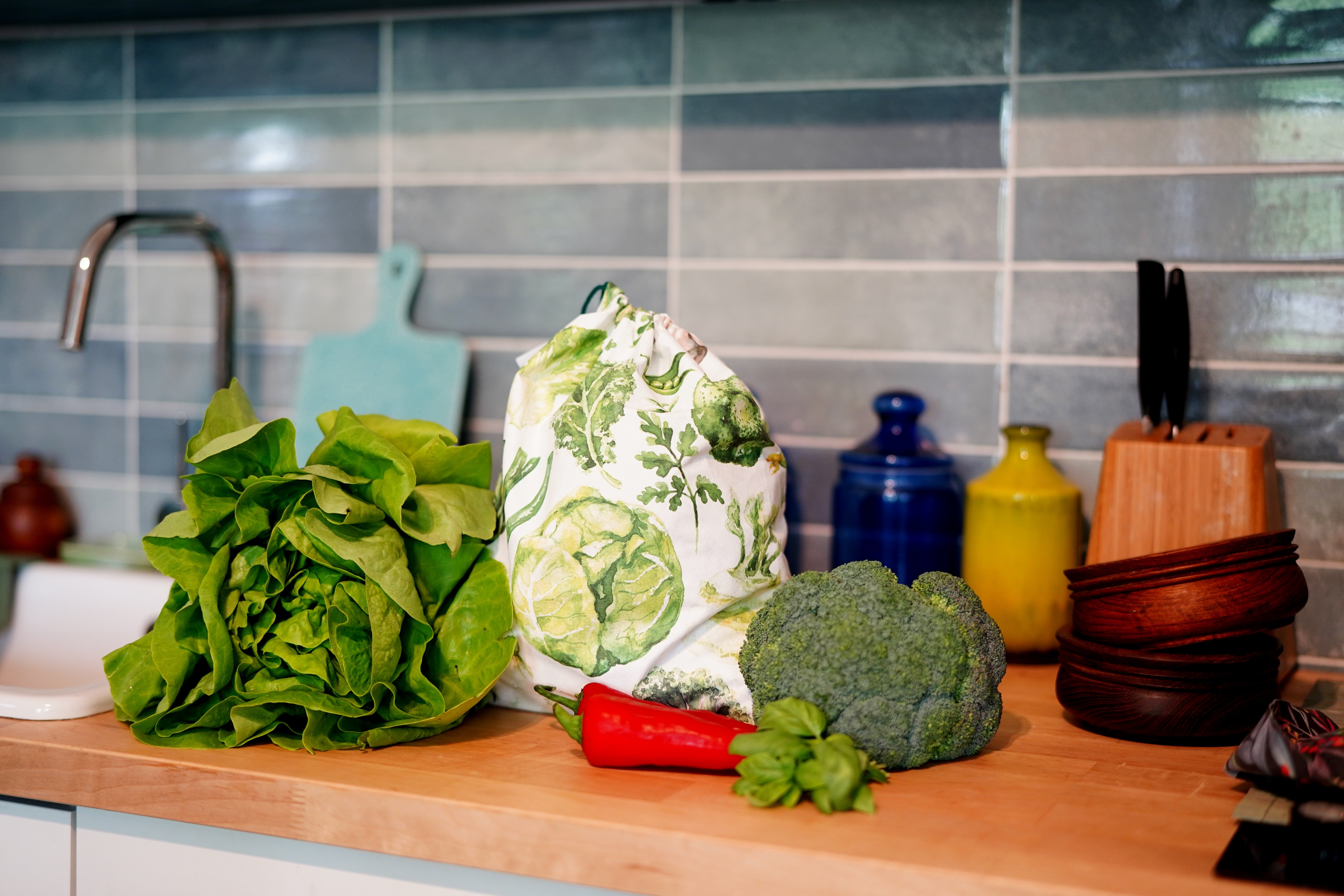
European households generate about 35.3 kg of fresh fruit and vegetable waste per person per year, 14.2 kg of which is avoidable (EC/JRC, 2018). Correct food storage at home is one of the recommendations given to reduce food waste in daily life.
By using Evolon® The Food Bag you can help reduce food waste (based on correct storage; see test summary below). It's simple and easy - tested fruit and vegetables may last longer when stored correctly in Evolon® The Food Bag.
How do you use Evolon® The Food Bag?
Here you will find a table with information on the most common foods.
Download now.
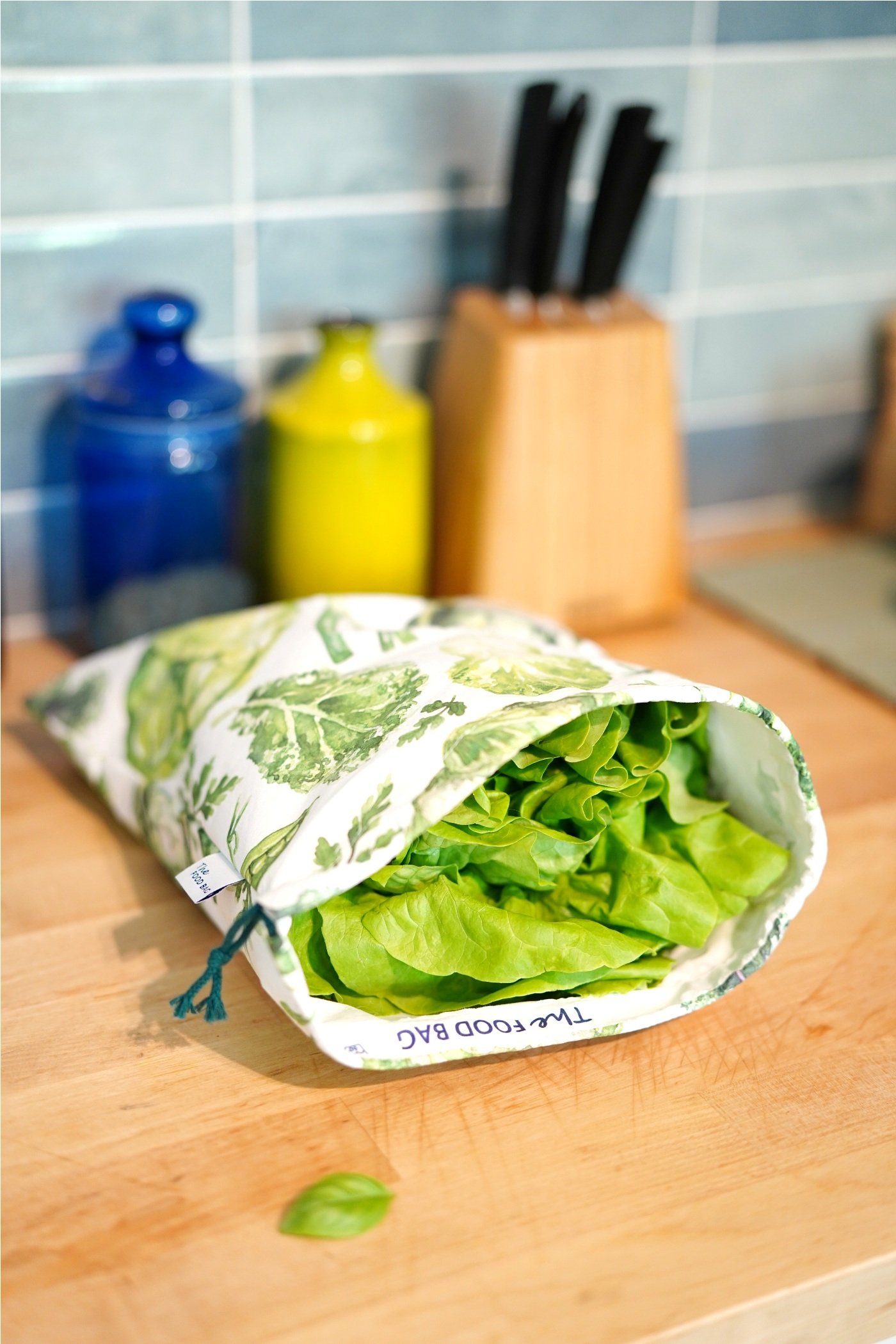
Benefits: Keep food fresh. Help food last longer. Reduce waste.
(Performance depends on correct use; based on internal and external tests described in test summary below)
- Breathability and moisture management in one: Evolon® The Food Bag can help protect vegetables from excess moisture and drying.
- Odor blocking feature: The fine Evolon® micropores help reduce odor transfer from products such as spring onions and leeks in the bag, helping prevent them from spreading into the fridge.
- Can be washed at 40°C
- Tested to help extend the shelf life of the tested food: Herbs and vegetables may last longer when stored correctly in Evolon® The Food Bag (see test summary below).
- Helps reduce food waste through improved storage conditions when the bag is used properly.
- Makes life easier: You may need to shop less frequently when food stays fresh for longer.
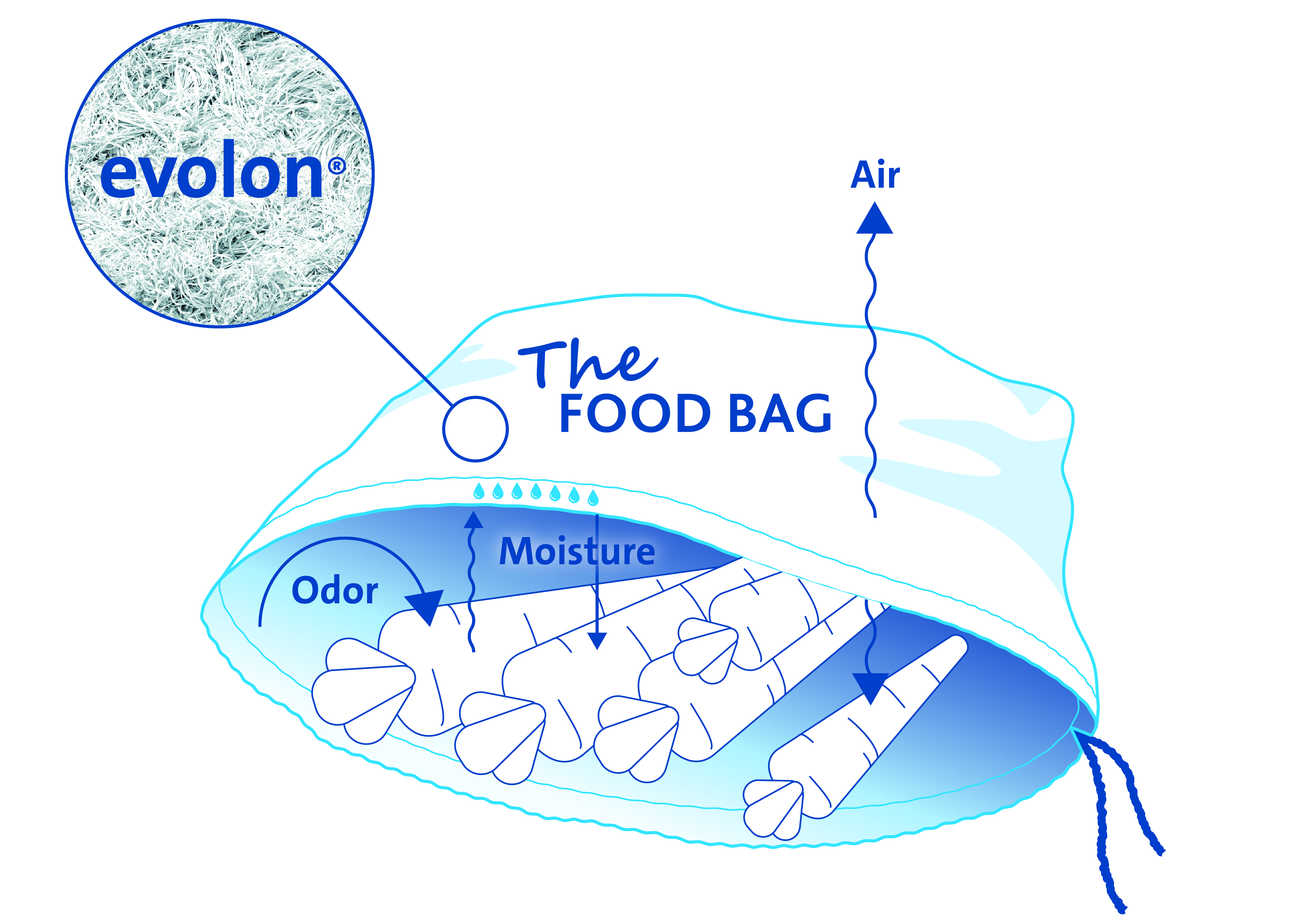
Excellent moisture balance
Evolon® The Food Bag works like a climate chamber due to its unique structure. It intelligently absorbs and stores moisture and returns it evenly.
Waterlogging, which can cause fruit & vegetables to rot, is reduced. Mold growth may be slowed down and at the same time Evolon® The Food Bag helps prevent them from drying out.
Evolon® – made by Freudenberg
- Revolutionary fabric invented by Freudenberg
- Complies with applicable EU requirements for food contact
- Efficiency tests for moisture management: see test summary below
- Patent pending
Where to buy Evolon® The Food Bag
Coming soon

Zu gut für die Tonne
Evolon® The Food Bag was nominated for the German federal award 2020.
Zu gut für die Tonne! is part of the National Strategy of the German Federal Ministry of Food and Agriculture (BMEL) to reduce food waste. Zu gut für die Tonne!
FAQ – Frequently Asked Questions
Yes, we recommend you wash Evolon® The Food Bag before first use to ensure the best hygienic conditions for storing your food.
Evolon® The Food Bag is 100% made in Europe. The Evolon® fabric, the technological secret behind the great performance of Evolon® The Food Bag, is made in France by Freudenberg, the well-known German-based company. The bag is sewn in another European country (the location may vary according to production lots).
You can tumble dry the bag if you wish, but that isn’t a must. Evolon® The Food Bag will dry very quickly if you simply hang it up to dry.
Evolon® The Food Bag complies with the applicable European requirements for food-contact materials regulation.
Evolon® The Food Bag can be washed at 40°C. Depending on the performance of your washing detergent, you can also choose to wash it at a lower temperature.
Based on state-of-the-art storage recommendations and a test conducted at an independent institute, together with Freudenberg’s internal tests, we have drawn up a table of simple instructions for the foods covered by the food chart. Should the food be stored in the fridge or at room temperature? Should Evolon® The Food Bag be kept dry or moist? Our food chart answers these and other questions to help you get the best out of Evolon® The Food Bag and enjoy fresh fruit and vegetables.
Performance: Test Summary
In the conducted freshness tests, the tested vegetables remained fresh longer in Evolon® The Food Bag than unprotected vegetables. These results suggest that Evolon® The Food Bag may contribute to reducing food waste. The tested vegetables stored in the bag dehydrated more slowly and/or remained edible for longer than unpackaged vegetables. Performance may vary according to the type of vegetable, the initial state of the vegetable, and the storage conditions. Here are the results from the tests:
According to tests conducted by the Fraunhofer Institute for Process Engineering and Packaging IVV:
- White mushrooms in the fridge: White mushrooms stored in Evolon® The Food Bag lost approximately 10% of their water after 8 days, whereas unprotected white mushrooms under the same test conditions lost about 15% of their water.
- “Overall, there was a significant reduction in water loss during storage in the Evolon® bag compared to unpackaged storage. The color differences and the evaluation of sensory attributes showed no significant changes due to the high standard deviation of the data, but differences in mean values that demonstrate the superior suitability of the Evolon® bag.” (translated from German)
According to internal tests conducted by Freudenberg Performance Materials:
- Corn lettuce in the fridge: Corn lettuce stored in Evolon® The Food Bag showed no visible rotting or yellowing after 10 days of storage, whereas unprotected corn lettuce showed visible rotting or yellowing after 3 days, based on qualitative observations.
- Lettuce in the fridge: Lettuce stored in Evolon® The Food Bag lost approximately 11% of its water after 8 days, whereas unprotected lettuce lost about 20% of its water.
- Carrots in the fridge: Carrots stored in Evolon® The Food Bag lost up to 34% of their water after 8 days, whereas unprotected carrots lost up to 48% of their water over the same period.
- Cauliflower in the fridge: Cauliflower stored in Evolon® The Food Bag was still edible after 14 days, whereas unprotected cauliflower was edible only until 11 days, and no longer edible after 14 days, based on qualitative observations.
- Broccoli in the fridge: Broccoli stored in Evolon® The Food Bag was still firm, crunchy and considered fully edible after 7 days, while unprotected broccoli was mushy and showed initial mould growth after the same period, based on qualitative observations.
- Spring onion in the fridge: Spring onions stored in Evolon® The Food Bag lost approximately 9% of their water after 7 days, whereas unprotected spring onions lost almost 13% of their water over the same period.